How to Repair Credit for a Mortgage: 7 Steps if You Have a Low Score
Learn seven practical steps to improve your credit before applying for a mortgage, from disputing errors to lowering utilization and building payment history.
Even the smallest mistakes can lead to collections, like forgetting to return a Verizon Fios box or missing a medical bill. This hurts your credit score and makes it harder to get loans.
But getting advice about credit repair can feel like a confusing mess, even with countless online resources.
While it might take a bit of research, the truth is most people can tackle credit repair on their own. That's where we come in, we want to help you navigate the steps you can take to repair your credit for your mortgage.
And if you need more help, we've got you covered.
What Happens If I Have A Low Credit Score When I Apply For a Mortgage?
If you find yourself with a low credit score when applying for a mortgage, it can feel like you're trapped with limited options, and everywhere you look, the down payment and cash reserve requirements get higher and higher.
How can you possibly hope to afford a home with so few choices available? The good news is that you have more than you think you do.
The truth is, some borrowers may still have mortgage options with lower credit scores, depending on the loan program and lender overlays.
In those cases, the lender may need to manually underwrite the loan, and you should expect that requirements like a larger down payment, stronger reserves, or additional documentation could apply.
But it's possible.
You just have to remember that lenders view your credit score as one indicator of your ability to repay the loan. However, everyone's financial situation is different, and there are many other mortgage products you may not be aware of that could work in your situation.
Here's a quick chart of different types of loans and their minimum credit requirements:
| Loan Type | Minimum Credit Score Requirement | Other Requirements |
|---|---|---|
| FHA loans | Varies by lender and profile |
|
| Conventional loans | Often starts around 620, but lender guidelines apply |
|
| Non-QM loans | Varies widely by lender |
|
| Jumbo loans | Varies by lender |
|
What Steps Can I Take to Repair My Credit Score For My Mortgage?
The good news is that there are steps you can take right now to help improve and repair your credit score. The sooner you start, the sooner your efforts will start to take effect.
1. Check/Obtain Your Credit Report
First things first, you need to know what's on your credit report. After all, this is exactly what your lender is going to see, so it's a good idea to make sure that everything on there is correct.
Now, there are three main credit bureaus that keep track of your credit history, Experian, Equifax, and TransUnion, and you can obtain reports from each of them individually or through AnnualCreditReport.com, the federally authorized source for free credit reports.
Pro Tip: Credit monitoring tools can be helpful, but start with your actual credit reports so you can review the information creditors are furnishing.
2. Assess Your Credit Situation
Once you have your credit report in your hand, you're ready to start reviewing it. Every report looks slightly different, depending on who pulled it, but each one will be based on the same five principles:
- Payment history
- Amount of debt (utilization)
- Credit age
- Credit mix
- New credit
Each of these principles has different metrics that affect your overall score. Here's a sample of Experian's high-level overview section:
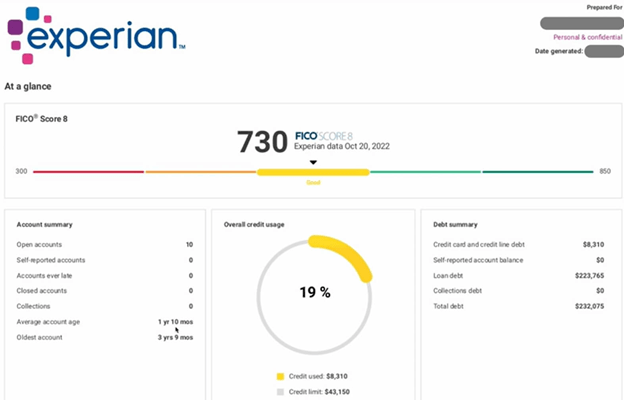
As you dive deeper into your credit report, you'll see it contains your:
- Personal and employer information
- All your open accounts (loans, credit cards, mortgages, etc.)
- Closed accounts
- Collections
- Public records (bankruptcies, etc.)
- Inquiries (hard and soft)
You want to ensure that the information in each section is accurate. If something is out of place, we'll work on removing it in the next section.
Pro Tip: Your loan officer or housing counselor may be able to help you identify which issues are likely to matter most for a future mortgage application.
3. Dispute Any Errors You Find
If you discover any errors on your credit report, such as incorrect personal information, account details, inaccurate payments, or even fraudulent accounts, you need to have them corrected or removed when appropriate.
To do this, you need to:
- Gather any evidence that supports your claim, such as account statements, payment receipts, or anything that proves the error.
- Contact the credit reporting agency, or agencies, and initiate the dispute.
Typically, you'll have to compose a clear written dispute that identifies the specific items you believe are incorrect.
Once received, credit reporting companies generally must investigate disputed information, usually within 30 days, under the Fair Credit Reporting Act.
They will attempt to contact the company or creditor that provided the information.
If the information cannot be verified or must be corrected, they should send you the results in writing and an updated version of your report when required.
Pro Tip: Keep copies of your dispute letters, supporting documents, and responses so you have a paper trail if you need to follow up.
4. Establish a Positive Payment History
While you should be working on this before you even pull your credit report, it's essential that you're working to establish a positive payment history as it helps demonstrate your ability to manage debt responsibly.
Factors that contribute to a positive payment history include:
- On-time payments
- How long you've been making on-time payments
- Your payment consistency
- Different types of accounts you have (revolving credit, loans, etc.)
The best thing you can do is pay your bills on time and in full when possible. While you won't see improvements to your credit score overnight, if you keep paying on time, you may gradually improve it.
Pro Tip: If you're prone to forgetting when your payments are due, you can enroll in autopay, create reminders, and communicate with creditors.
5. Lower Your Credit Utilization Rate
One of the key factors in determining your credit score is your credit utilization rate, which is the percentage of your available credit that you're currently using.
In general, lower utilization is viewed more favorably than higher utilization. Many consumers aim to keep revolving balances relatively low compared with their limits.
To lower your utilization rate, you'll want to:
- Try to reduce more than the minimum, or pay off your credit card balances in full each month if possible.
- Consider making multiple monthly payments if you can't pay off your balance in full.
- Be cautious about closing accounts, as this reduces your overall available credit.
Pro Tip: Using a budgeting app or tracking your expenses can help you stay on top of your credit utilization rate and make it easier to manage your spending.
6. Limit Hard Inquiries on Your Credit
Hard inquiries occur when a lender or creditor pulls your score because you applied for a new loan, mortgage, or credit card. These inquiries can affect your credit score, though the impact is usually limited and temporary.
When you apply for a mortgage, your lender will do a hard inquiry on your credit. But there are ways you can keep these types of inquiries from piling up, such as:
- Being selective about applying for new credit
- Spacing out your credit applications if you need multiple accounts
- Trying prequalification first, when available, because it may use a soft inquiry
Pro Tip: FICO states that certain rate-shopping inquiries for mortgages, auto loans, and student loans are typically treated as a single inquiry when made within a focused shopping window.
7. Seek Out Lenders Who are Willing to Work with You
If we're being completely honest, repairing your credit score can be a challenge, especially if you are new to understanding the ins and outs of credit repair.
While you can definitely follow these steps to increase a low credit score, there are times when you might hit a roadblock that's tough to overcome on your own. That's where credit repair specialists, HUD-approved housing counselors, or experienced loan officers may come into play.
They may be able to help you understand the rules, documentation, and next steps that matter most in your situation.
And when you're on the hunt for a mortgage, finding a lender that's willing to work with you and your unique credit situation is essential. These lenders may be able to explain which mortgage products are available for your needs.
Pro Tip: Before paying for outside credit repair, consider speaking with a HUD-approved housing counselor and asking a lender which credit issues are actually affecting your mortgage options today.
Get the Best of Both Worlds With MDL
At Modern Day Lending, we understand the needs of today's borrowers and prospective homeowners, which is why we decided to launch our credit repair services, that way, we can help you with the entire mortgage process.
Our goal is to help you prepare for homeownership, and that can start with getting your credit in the best possible shape.
To do this, we engage with credit bureaus and creditors as appropriate to address inaccurate or negative items on your credit report. We also work to help borrowers understand the credit factors that may affect mortgage options.
So, if you're looking for a more comprehensive approach to improving your credit and exploring mortgage options tailored to your situation, look no further than Modern Day Lending.
Our team is ready to help you better understand your options. Get in touch with us and take the first step toward a stronger mortgage application.