Can You Get a Jumbo Loan With 10% Down?
Can you get a jumbo loan with 10% down? Often, yes. See current conforming loan limits, credit, DTI, and reserve requirements, and how to qualify with less down.

Yes, you can get a jumbo loan with 10% down, if your credit, debt-to-income ratio, income documentation and cash reserves meet the lender's guidelines. These programs are most common for primary and second homes, and depending on the lender, they may use PMI, lender-paid mortgage insurance pricing or a piggyback second loan structure.
A jumbo loan is any mortgage above the conforming loan limit for the county where the home is located. For 2026, the baseline one-unit conforming limit is $832,750 in most counties, but higher-cost counties can go up to $1,249,125. Below, we break down 10% down jumbo loan requirements, when a loan is truly jumbo versus high-balance conforming, and how to strengthen your application.
Is a 10% Down Payment Enough for a Jumbo Loan?
A jumbo loan with a 10% down payment is possible in some cases, but it will depend on many factors, including the lender's underwriting guidelines, the borrower's financial profile, and the type of property.
If you have less than 10% to put down, see our guides to 5% down jumbo loans and other jumbo loan down payment options.
Underwriting Guidelines
Because jumbo loans are larger than the conforming loan limits the Federal Housing Finance Agency (FHFA) sets for loans Fannie Mae and Freddie Mac can buy, each lender writes its own guidelines, so terms and requirements can vary significantly from one lender to another.
Some lenders may have more flexible underwriting guidelines that allow them to evaluate a variety of factors to qualify borrowers for a 10% down payment. Others follow strict guidelines that can be hard for some borrowers to adhere to.
You'll need to research or speak with different lenders to find out if you meet their specific requirements.
Note: For 2026, the conforming loan limit for a one-unit home is $832,750 in most of the country and up to $1,249,125 in designated high-cost areas, according to the Federal Housing Finance Agency. A loan amount above the limit for your county is what makes it a jumbo loan. The limits reset every year, so check the current figure for your county before you apply.
Borrower's Financial Profile
A borrower's financial profile will also be taken into account when determining whether to approve them for a 10% down payment jumbo loan.
Generally speaking, borrowers must have strong credit scores and income streams sufficient to cover the jumbo loan payments and other monthly debts. We'll cover the requirements in more detail below.
Property Type
While borrowers can use jumbo loans to cover a wide range of properties, if you only want to put 10% down, it limits your property type to primary or secondary residences.
The majority of lenders don't offer 10% down jumbo loans for multi-unit properties, vacant land, or commercial properties.
Example: When 10% Down Is Jumbo, and When It Is Not
Scenario | Home price | Down payment | Loan amount | Result |
|---|---|---|---|---|
Baseline-limit county | $1,000,000 | $100,000 | $900,000 | Jumbo, because the loan amount is above the 2026 baseline conforming limit of $832,750 for a one-unit home |
High-cost county | $1,000,000 | $100,000 | $900,000 | Could still be conforming, because some high-cost counties allow one-unit conforming loans up to $1,249,125 in 2026 |
That distinction matters because a borrower shopping for a 10% down jumbo loan may actually fit a high-balance conforming option instead, depending on the county. From an underwriting standpoint, we would then look at your credit profile, debt-to-income ratio, reserves after closing, occupancy and property type before matching you to the right structure.
What Are the Requirements for a Jumbo Loan With 10% Down?
The requirements for obtaining a jumbo loan with a 10% down payment will vary depending on the lender and the specific program being offered.
However, there are some common requirements that borrowers should be aware of when seeking a jumbo loan with a low down payment. These may include:
Credit Score: Most lenders require a minimum credit score of 660 to qualify for a jumbo loan with a low down payment. However, some programs require a score of 700.
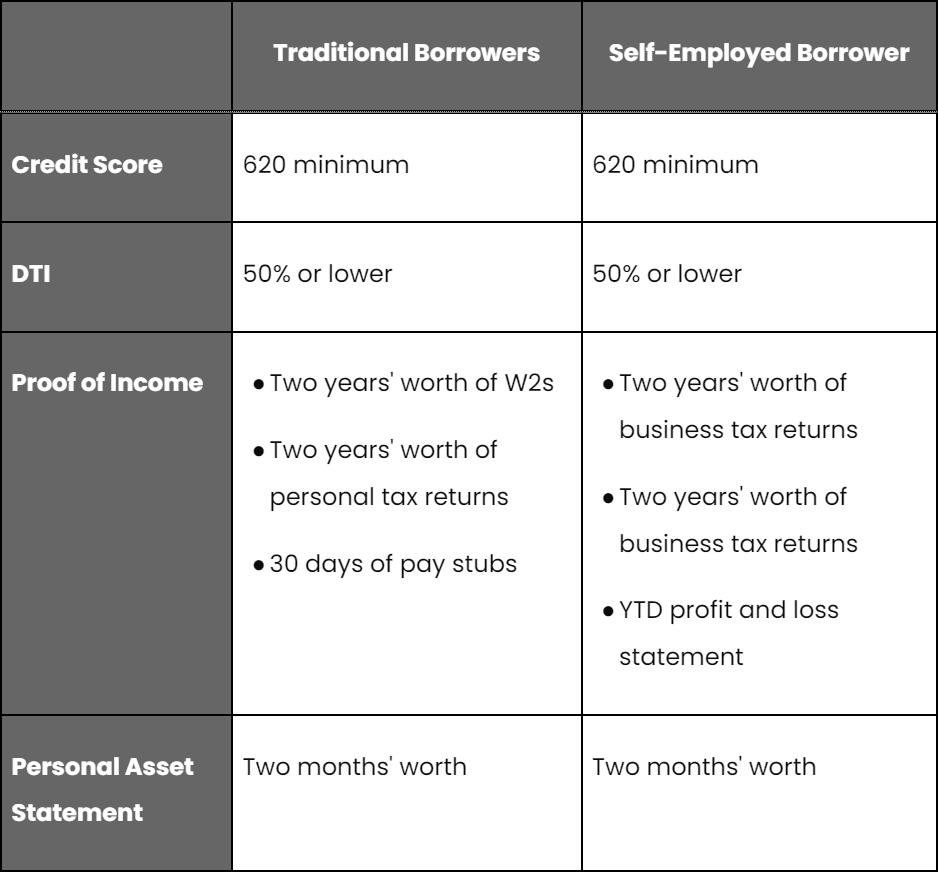
Income: Borrowers should be ready to document income in the format the program requires. For W-2 borrowers, that often means pay stubs and W-2s. For self-employed borrowers, it may mean personal and business tax returns, bank statements or another approved documentation method, depending on the loan program.
Debt-to-income ratio (DTI): Many lenders want to see a DTI of 36% or lower, but typically, they will accept DTIs up to 45%.
Cash Reserves: Borrowers should be prepared to show assets left after closing. In jumbo underwriting, reserves usually mean liquid or near-liquid funds that could cover future housing payments if income is interrupted. Depending on the program, eligible assets may include checking and savings balances, vested retirement funds subject to lender rules, and certain brokerage accounts.
Private Mortgage Insurance (PMI): While it is possible to secure a jumbo loan with just a 10% down payment, some lenders may require you to purchase PMI to minimize their risk.
What Are the Best Ways to Boost Your Odds of Securing a Loan?
There are several ways you can boost your odds of securing a loan:
Improve Your Credit Score
You'll need a minimum of 660 for most jumbo loans, but the higher your credit score, the more chances you have to secure the loan amount you desire and qualify for a lower interest rate.
You can improve your credit score by:
Paying your bills on time
Reducing your credit card balances
Avoiding applying for new credit too frequently
Disputing incorrect information on your report
Lower Your DTI
This ratio gives lenders an indication of your financial health. A lower ratio means you will have more chances to be approved for a loan, so strive to reduce debt and maximize income when possible.
Paying down credit card balances can help on two fronts: it lowers your minimum monthly payments, which reduces your debt-to-income ratio, and it lowers your credit utilization, which can lift your credit score.
Thoroughly Document Your Income and Assets
Lenders will delve into your financial history and review your income and assets, so it's vital that you provide accurate documentation of both.
The more prepared and organized you are with your financial documents, the smoother your application process will be. Make sure you document all sources of income, which includes:
Two years' worth of tax returns
Two years' worth of W2s
Paycheck stubs
Bank Statements (at least 12-24 months)
Personal Asset Statements (at least two months' worth)
Shop Around
Different lenders may have their own lending criteria and may offer varying interest rates and loan terms. It can be helpful to shop around and compare offers from multiple lenders to find the best deal.
Make sure you shop around and find a lender that:
Suits your unique needs
Has competitive rates
Has flexible repayment options
How 10% Down Jumbo Loans Are Commonly Structured
Structure | How it works | What to ask the lender |
|---|---|---|
Borrower-paid PMI | You make a 10% down payment and pay monthly mortgage insurance | How much is the PMI, and when can it be removed? |
Lender-paid pricing | The lender builds the added risk into the rate instead of charging separate monthly PMI | What is the rate difference versus a comparable no-PMI structure? |
Piggyback second mortgage | You combine a first mortgage with a smaller second lien to keep the first loan at a lower loan-to-value | What are the rate, payment and closing costs on both loans together? |
There is no single best structure for every borrower. The right fit depends on your credit profile, reserves, how long you expect to keep the loan and whether you want the simplicity of one payment or the flexibility of a first and second mortgage combination.
Frequently Asked Questions
Can you get a jumbo loan without PMI?
Some lenders offer jumbo loan programs with no PMI even below 20% down, often by pricing the risk into a slightly higher rate or by using a structured second mortgage instead. Ask each lender directly whether their 10% down program requires PMI or offers a no-PMI alternative.
What is a piggyback loan, and can it help avoid PMI on a jumbo purchase?
A piggyback loan pairs a first mortgage with a smaller second mortgage, for example an 80-10-10 structure, so the borrower puts 10% down, finances 80% with the first loan, and covers the remaining 10% with a second loan instead of paying PMI. Not every lender offers this structure for jumbo loans, so it is worth asking about specifically when you shop around.
What counts as a jumbo loan?
A jumbo loan is any mortgage amount that exceeds the conforming loan limit FHFA sets for the county where the property is located. Because the limit is reset annually and varies by area, the same loan amount can be conforming in one county and jumbo in a higher-cost one.
Is a jumbo loan harder to qualify for than a conforming loan?
Often, yes. Fannie Mae and Freddie Mac don't buy jumbo loans, so lenders usually apply tighter standards for credit, debt-to-income ratio, reserves, and documentation. That doesn't put approval out of reach, but the file usually needs to be cleaner, and your choice of lender matters more because jumbo guidelines vary.
Talk Through Your 10% Down Jumbo Options
If you are comparing a jumbo loan with 10% down, the key questions are whether your loan amount is truly jumbo in your county, how your income will be documented, how much reserve strength the lender wants to see and whether a one-loan or piggyback structure makes more sense.
Modern Day Lending's jumbo mortgage team can help you compare those options based on your occupancy, credit profile and available assets. Here's a quick checklist of the documents and strengths lenders usually review:
If you want to compare structures, contact a mortgage expert to review your target purchase price, county loan limit and documentation options before you apply.